


Lawrence Grandpre
Political Commentator
Leaders of a Beautiful Struggle
Many Black folks don’t know what the politics of “abundance” are, but they are increasingly impacting our lives. When the only Black governor in the United States, Maryland’s Wes Moore, repeats the phrase “we must stop being the party of ‘no’ and ‘slow’ and start being the party of ‘yes’ and ‘now’,” this is a phrase straight out of the abundance playbook. When he vetoes a reparations study bill saying, “Democrats need to stop thinking we need a 200-page study on everything,” abundance rhetoric is weaponized against Black people. When powerful thought leaders backed by multimillion-dollar think tanks claim abundance is the future of the Democratic Party, this concept warrants in-depth analysis.
Despite this, I have not seen any long-form pieces critiquing the “abundance” concept from a Black Power/Black self-determination perspective. This piece is designed to fill that gap. It is written to provoke those who argue that the Black freedom dream must be sublimated to a liberal or progressive vision of abundance.
Leaders of a Beautiful Struggle is a grassroots think tank in Baltimore that has passed state and local bills related to critical issues like police reform and reparations. We have also worked at the intersection of issues like government procurement and getting public money to grassroots community institutions, and we’re increasingly commenting on issues and conversations around housing, data centers, and energy—all issues centered on in the abundance argument. Thus, we are uniquely situated to provide a Black Power-centered analysis of the abundance argument.
Abundance, a book co-written by Ezra Klein of the New York Times and Derek Thompson of The Atlantic magazine, started as an attempt to influence the 2024 Democratic Party platform. Despite claims that Democrats “tax and spend,” Obama famously “sequestered” (i.e., cut) government spending following a post-recession stimulus bill widely criticized for being too small. Biden challenged traditional Democratic Party austerity by spending public dollars to subsidize green energy (the Inflation Reduction Act) and redistribute funds to local governments (American Rescue Plan Act). However, policy wonks argued these investments were not making voters “feel” like their lives were getting better.

Abundance argues that this feeling is because, for over 50 years, Democrats have allowed special interests (environmental groups, community associations) to delay and prevent critical government projects. They argue Democrats overemphasize participatory processes in governing, constantly speaking to small, loud community groups over delivering results. The solution for Democrats on key issues like housing and climate is not to just spend more money, as process and governmental inefficiency prevent just spending money from making folks “feel” the impacts of policy. Instead, advocates of the abundance perspective argue that Democrats should take a page out of the Republican playbooks. By cutting red tape regulations like restricting zoning laws, Democrats can improve housing costs by allowing far more construction, harnessing the law of supply and demand. The government could then invest in more research in critical sectors like housing, life science, and technology, which would increase the efficiency of agriculture, health care, and green energy. This will create an “abundance” of goods and services which will improve living conditions for Americans, finally making people feel like the government is improving their lives.
After 2024, many centrists retroactively viewed these policy recommendations as the dominant explanation for why Democrats lost to Trump again. They argued that Biden and Harris made cultural and political concessions to the groups in the Democratic base and still lost. Abundance advocates argue that stopping fascism requires doing whatever possible to convince folks outside the Democratic base that Democrats can visibly improve their lives and lower costs by producing “abundance”: cheaper housing through permitting reform and allowing prefabricated housing; cheaper health care through expanded Obamacare and new medical technologies to cure disease; cheaper energy through permitting reform and government investments in geothermal, solar, and wind; and cheaper food through innovations like vertical farms and lab-grown meat. Claiming not to be free-market capitalists, abundance advocates argue the government should nudge the markets and incentivize this work being done as rapidly as possible. It is a vision of pragmatic politics to usher in a technological utopia that would allow the Democrats to stand in contrast to the Republicans, with their focus on oil, gas, and America’s historical “greatness” making them the party of the past.
Even if it would mean angering some groups in the Democratic base, this sci-fi vision makes Democrats the party of the future. Right now, many see the Democrats as the party of the status quo, protecting “institutions,” the NIMBY (Not In My Backyard) suburbanites who resist affordable housing, and unpopular “groups” like environmentalists, community associations, and unpopular pro-open borders migration activists and woke Black Lives Matter types.
This centrist abundance theory has been challenged by the Bernie Sanders wing of the Democratic Party, pointing out obvious problems with the centrist liberal “abundance” argument and countering with their own socialist version of “abundance.” This group correctly points out the absurdity of chalking up the Democratic Party’s failure to deliver for voters to process and bureaucracy and not corporate power, which holds back popular “abundance”-style policies like Medicare for All. They also note that Democrats are unpopular not just because of bureaucracy but also because many in the Democratic base are turning against the party for being too moderate on issues like Gaza and climate. Leftist New York City mayor Zohran Mamdani has adopted “abundance” language, claiming his platform of free buses and publicly owned grocery stores represents an agenda that will deliver “safety, affordability, and abundance.” The Jacobin-supported podcast Confronting Capitalism promotes Mamdani’s co-optation of the abundance concept as an antidote to what the podcasters see as the toxic “identity politics” deployed by liberals to attack and divide the multi-racial working class. They cite union-built, publicly subsidized nuclear plants powering high-speed rail as an example of abundance politics that shows how socialist abundance can revival the New Deal tradition.
These two visions of abundance are part of the Democratic Party civil war, with centrist Democrats fearing the party’s leftward shift will frighten moderates, and leftists claiming only a radical vision of universal policy can mobilize voters. Both claim their vision of abundance is the key to improving conditions to win elections. However, they share fundamental limitations in their understanding of Black politics; allowing both liberals and leftists to claim Black voters and Black elected officials, rather than structural forces of white supremacy and empire, are the true threats to “abundance.”
There is now a cottage industry of individuals trying to tell the story as to why the American government has failed to deliver for folks at the local level. The social movement that explicitly attempted to force American democracy to deliver for its people, the Black Power/local control movement, has largely been absent from both leftist and centrist abundance narratives. In a conversation with a group of philanthropic leaders, Ezra Klein claimed that, to the extent that American liberal democracy delivered during the civil rights movement, it was by liberal whites and Black leaders moving to the center. This, first, assumes that progress made by this political maneuver was sufficient for Black Americans, who received some economic gains only to face COINTELPRO, mass incarceration, and deindustrialization in the 1970s.
It also ignores how the radical political agitation of Black people forced the 60s and 70s liberals into action. In the book Freedom Train, Cedric De Leon argued that what he called “Black civil society”—the amalgamation of community political groups, Black Greek letter organizations, socialist and communist radicals, pan-Africanists, and Black nationalists outside of the mainstream labor and electoral politics space—expanded the political spectrum to force centrist political institutions like labor to address civil rights issues. Far from a smooth liberal consensus slowly and strategically advancing civil rights, De Leon’s historiography shows that white labor consistently tried to ignore and co-opt Black labor agitation. It was only through pressure from non-union Black civil society competing with labor for political influence that labor was forced to engage in civil rights issues—for instance, the inclusion of the Civil Rights Act in the March on Washington, which originally planned to focus only on traditional labor issues.
Subsequently, Kwame Ture, in his autobiography Ready for Revolution, discussed how the Voting Rights Act came specifically through Black nationalist agitation. The work of the Mississippi Freedom Democrats and the Black Power wing of the Student Non-Violent Coordinating Committee (SNCC) was done with the explicit intent for Black communities to use their newly acquired vote to force public investments into creating an “abundance” of community institutions to meet community needs. From the League of Revolutionary Black Workers’ calls for billions of dollars in reparations, to the Congress of Racial Equality’s attempts to hold President Johnson’s Community Action program’s pledge of “maximum feasible [community] participation” to its word, Black Power was far from the irrational, emotional demand for cultural recognition it is characterized as by many of the center and left, who see in Black Power a prototype for the divisive and limited neoliberal “identity politics” of the Clinton/Obama era. Instead, it was an extension of grassroots social movements tied to revolutionary Pan-Africanism and what Professor Ronda Williams called “concrete demands” to build public infrastructure, community development institutions, medical clinics, and other programs to meet community needs.

Many of the organizations that reflect the possibilities of this vision are represented in the human social service sector. Given the proximity of social work, education, health, and cultural programs to poor Black communities, Black Power was a tool not only to assert the need to fund these services for the Black community but, more specifically, to use the Black vote to demand that Black institutions be in control over the programs serving their community. Joyce King, in her book The Black Power Movement and American Social Work, notes that, given the role of racism and slavery in affecting Black family formation to make them distinct from white families, the role of progressive era racism in pathologizing Black families, and the unique retentions of African culture in the African American community, social work was a fertile space for Black communities’ demands for community control over human social services. Black social workers would organize against interracial adoptions, which they believed normalized the pathologization of Black families and the belief that giving Black youth to white families reflected a desire for cultural genocide. They also promoted the value of Black extended family networks as a proximate alternative to terminating parental rights, like kinship care, and demanded state investment in resources to be invested in these practices.
King asserts that these efforts equate to a Black power version of what Italian Marxist Antonio Gramsci called the “long march through the institutions.” While often not adopting the term “socialist,” many in the Black Power movement saw the vote as a tool to empower Black people within institutions with the ability to influence critical elements of society toward a revolutionary redistribution of power and resources into independent Black formations. Black folks in the 70s saw this Black Power “long march” materially benefit their lives in various ways. Money from the Comprehensive Employment and Training Act (CETA) and the Employment of Artists Act was funneled through Black cities to employ Black artists at the local level. Showing the power of these investments to foster Black creatives, author Toni Cade Bambara talked about moving to Atlanta in part because of investments in Black arts communities, produced by the election of Maynard Jackson. Model Cities Programs were run in Baltimore by leaders like Walter Carter, who facilitated the investment of money in Black neighborhoods through participatory government machinery, thereby empowering residents to have meaningful control over these funds.

Another exemplar of this progressive Black power politics was Parren Mitchell. Part of the vaunted Mitchell political family, which included NAACP lobbyist Clarence Mitchell Jr., the so-called 101st senator, Parren became the first Black man elected in the South since Reconstruction when he won election to the 7th district congressional seat in Maryland in 1970. A cofounder of the Congressional Black Caucus, Mitchell was an anti-war progressive who spoke to DSA groups in the 1980s, supported political prisoners organizing prison unions, and was known for his resistance to former President Reagan’s attempts to fund the Contras, a right-wing paramilitary group in Latin America. He also sought pragmatic ways to increase the employment of working-class Black men in his Baltimore district who had been excluded from notoriously conservative and white construction unions. He pushed through requirements that a mandatory percentage of those who build federal construction projects be minority contractors. Those who accuse these policies of merely replicating “Black capitalism” ignore the reality of the assault on Black communities during this time through the War on Drugs and COINTELPRO. Such an attack both warranted the survival politics that Mitchell, as a self-professed critic of capitalism, saw as necessary and normalized the racial exclusion built into seemingly racial-neutral “seniority” politics within unions. Indeed, despite set-asides being gutted by the Supreme Court in the 80s and 90s, many in Baltimore’s Black community use Mitchell and his politics as a standard of political excellence, reflecting a Black abundance that meets essential community needs and making Mitchell a political touchstone.

In reality, it is in the backlash to Black Power that we see a deeper current of how governance ecosystems have become the ossified and sclerotic system the abundance crowd critiques. In their article “The Insulation of Local Governance from Black Electoral Power: Northern Cities and the Great Migration,” Grumbach, Mickey, and Ziblatt show a statistical correlation between cities that experience increased inflows of Black residents and the shifting of power from elected mayors to city managers. They argue this correlation is directly linked to anxieties around increased Black electoral power. These forms of technocratic governance are less likely to respond to the demands of voters than to organized interests like community associations, universities, and existing nonprofit infrastructures, reflecting the sort of adherence to the status quo and an incremental, procedural focus that abundance advocates critique. In Baltimore, we see the rise of unelected inspectors general, accountable to a board of directors instead of the voters and serving as a vehicle to undermine and pathologize Black governance.
All this reflects a desire to undermine small-d, democratic control of resources when regarding Black cities and Black voters. Claire Dunning, in her book Nonprofit Neighborhoods, documents what Black Power advocates have argued for decades: the shift from the government providing services to the nonprofit sector receiving government funding to provide those services is stimulated by anxieties around Black elected officials overseeing the mechanism of public governance. Indeed, Dunning points out an underreported fact that she says signals a serious shift in American governance and political economy: the majority of the money that nonprofits receive is not from donations but from the government, meaning that the primary means of governance service provision is through nonprofits. This challenges traditional class-first notions that the neoliberal shift towards nonprofits was primarily around capital seeking to launder its image and open new markets through philanthropy. What the class-first narrative of nonprofits misses is that these foundations and nonprofits, whose boards are often majority white capitalists and beyond the influence of electoral politics, were considered more effective stewards of tax money than Black elected officials because of a racialized backlash to Black Power’s “long march” through public institutions. This included not just conservatives but also liberals and progressives who had concerns about Black Power’s “long march through the institutions.”
There is what one could call a “Black Power Paradox.” The more money given by the government in the name of “helping the Black community,” the less control the Black community has over that money, as it is being managed by a cadre of largely white but increasingly multiracial college-educated folks in nonprofits. When these technocrats fail to solve the problems of the Black community because they have no true knowledge of the Black community, the failure is chalked up to an excess of Black community control and political power. Meanwhile, the failure is actually from a lack of community control and Black political power. This dynamic is summed up well by Dr. Khalid Al-Mansour in a 1994 interview with journalist Tony Brown:
They can manipulate the process, some who believe that they can benefit from the process and divide the spoils. What do I really mean? White people today generally believe that there have been too many opportunities given to the Blacks: SBA loans into the trillions, set-asides into the trillions, Black people committing crimes, and assuming no responsibility whatsoever. And when they kill white people, especially, the Black community does not speak out and condemn it… That’s the general mood. I’m not saying that’s all accurate. That’s the general mood of white people. On the other hand, the Black people are saying, “We haven’t got anything. We’re at the bottom; we’ve been the bottom since we’ve been here. We’ve been slaves, and now we see very little except politicians running around making speeches.” In fact, what most white people don’t know is that that amount of money that was generally earmarked for the Black masses never arrived. Or it arrived in very small measures. It was siphoned off by a group of middle-class Blacks and middle-class whites, and the whites got more than the Blacks because the Blacks were obsessed with…lofty dreams: how one day he would be a part of the corporate 500, maybe the first Black in the White House… That kind of syndrome caused the Black to leave his people psychologically. He may ride through the hood from time to time.Psychologically, he’s not there. His entire life has been spent trying to find a way to get away from the Black masses.
This quote crystallizes a few essential arguments of a Black critique of abundance. Al-Mansour’s 1990 analysis could stand in for today, with Small Business Association loans and set-asides being swapped out for Black Lives Matter foundation grants. It, however, also shows that this racial backlash preceded 2020 and is an essential part of post-voting rights American politics.
Also, it reveals that the problem is not only that Black governance “does not deliver”; it is also resistance to Black political power because of the assumed deviance assigned to Black people. Al-Mansour makes a direct link between the white American notion of Black people not being punished for violent crime and white frustration at Black people getting government benefits like racial set-asides for government contracts. Despite the logical argument that set-asides hire the same Black people who might otherwise commit these crimes—meaning one might theoretically support them if you are worried about crime—the perceived excess of Black political power that allows Black people to get away with murder in the white imagination means they are undeserving of investments like set-asides. The result is austerity for Black community development in exchange for funding policing and downtown (white) economic development. In the book Madeline Murphy Speaks, columnist Madeline Murphy writes that former Baltimore mayor and Maryland Governor govenor Martin O’Malley was following a playbook written by William Donald Schaefer, who held the same offices before him. She writes that Schaefer took the community action program money that Parren Mitchell and Walter Carter were pushing into Black neighborhoods and redirected it into downtown development. Nixon turned these city-specific federal funds into state-run block grants, allowing states like Maryland to redirect funds away from Black cities like Baltimore. White nonprofits and developers began to fill in the gaps as Reagan’s austerity kicked in. This produced fertile soil for the crack epidemic, an era of social disruption and violence. Between the 80s and 2010s, Schaffer and O’Malley presented their politics with “abundance” style rhetoric. Their political visions, in reality, were parasitic upon the Black abundance produced by the work of folks like Walter Carter, Perrin Mitchell, and Madalyn Murphy, allowing these white liberals (who often used progressive rhetoric) to redirect funds away from Black control to create “abundant” gentrified enclaves like the housing around Baltimore’s inner harbor.

All told, this cultural animosity to Black political power means neoliberalism should be seen, in large part, as a racialized attack on the very concept of government. UC-Irvine professor David Theo Goldberg writes that the denigration of the state is tied to the diversification of government post-Voting Rights Act:
…racial meanings have animated neoliberal attacks on the welfare state…attacks on affirmative action reveal a deeper critical concern for neoliberals troubled over race. In the U.S., neoconservative critics of the state implicitly identify it as representing blackness and the interests thought most directly to advance black life. As a result both of serious application of antidiscrimination legislation and of affirmative action policies, the state became the single largest employer of African Americans. The perception among critics of these programs accordingly devolved into the view that black people are either employed as beneficiaries of affirmative action or they are supported by welfare. In short, from the 1970s on, the state increasingly came to be conceived as a set of institutions supporting the undeserving… Fear of a black state is linked to worries about a black planet, of alien invasion and alienation, of a loss of local and global control and privilege long associated with whiteness. Neoliberalism, therefore, can be read as a response to this concern about the impending impotence of whiteness. (Goldberg,The Threat of Race, 2008)
Failure to account for the role of race in the production and implementation of neoliberalism has serious implications for both liberal and leftist applications of abundance we will explore later.
Finally, Al-Mansour’s quote reveals that Black power advocates did not ignore the dangers of Black capitalism and the creation of a Black “misleadership class”; they were seeking to call them out, holding them accountable the whole time. An analysis of political history reveals that Obama-type centrists who co-opt Black Power rhetoric often were the folks “selling out” the Black masses. Al-Mansour’s allusion to those who co-opt community’s resources wanting to become “the first Black president” shows that Black Power advocates were often well aware of the dangers of their politics being appropriated. The failures of Obama and Kamala are sometimes used by the left to invalidate the very concept of “identity politics.” Al-Mansour being a Black Power advocate and explicitly calling out centrist appropriation of identity shows the promise of using a deep analysis of Black Power as a lens to critique the nonprofit industrial complex and white political backlash, a lens this paper will apply to centrist and leftist versions of “abundance”.
Al-Mansour’s analysis complicates the push of Bernie Sanders-aligned mainstream “leftist” who advocate for investments in “services” without addressing the degree of racialized parasitism that makes these investments a meal ticket and jobs program for folks hustling off Black suffering. This belies the fallacy in Klein’s argument that merely increased funding for social programs reflects Democrats “going to the left on race” post 2020. Many in the Black community correctly see public investments in social services, which many progressives claim as helping the Black community, as the Democrats supporting their new suburban and college-educated professional managerial base rather than truly investing in the Black masses. In 2024, some responded accordingly by staying home and not supporting the Democrats.
This also gives some credence to concerns that the recent DSA-aligned primary victories rely on low-turnout, closed (i.e., registered Democrat only) primaries and are in non-majority Black districts. While leftists have won Black votes in recent races, these are in very low-turnout primary races, and these Black voters may not reflect a broad cross-section of Black civil society. The leftists have generally lost the majority of working-class Black areas, racking up Black votes in more affluent or multicultural areas. The Black masses have little faith that leftists won’t replace the hypothetical Black “poverty pimp” of the 70s with the college-educated, multicultural, non-profit technocrat of the 2010s-2020s and, thus, haven’t shown up to the polls in masses for leftists outside of New York City.
Far from being innately destined to fail, Black Power successes have been intentionally obfuscated and extracted from the historical record. One need look no further than the early 90s time frame of the Al-Mansure interview for an example of the power of Black civil society. In the face of unprecedented violence during the crack era, and predictions of a demographic “super predator” bomb of crime exploding as Gen X came into its teens and 20s, the USA saw a then-unprecedented crime drop in the 1990s extended through the 2000s. Some criminologists treat the “great crime decline” as if it were produced by alien forces, giving credit to any and everything but Black people: policing, prosecution, the Clinton-era neoliberal economic growth, and—in a now discredited piece of scholarship still repeated by some on the right (and even some of the left)— a decreased amount of lead poisoning.
All of this belies a more proximate and logical explanation obscured by the reality of racism: the Black community largely organized itself to end the crack epidemic. In his book When Crack Was King , Donnovan X. Ramsey cites reports from the government stating that it was not increased policing that shifted community norms around crack use and selling but grassroots Black community social movements, tied to community associations, churches, schools, and the Nation of Islam. In the early 90s, the Nation of Islam got contracts to patrol public housing projects in cities like Chicago and Baltimore. Studies show this work was successful at the time and prefigured the current rise of community violence intervention—before the contract was cut due to Zionist political backlash to the Nation of Islam receiving public funds, given accusations of antisemitism against the NOI’s leader, Louis Farrakhan. Joyce King notes that the Million Man March mobilized Black social workers to convince tens of thousands of Black families to adopt Black children. Black community drug treatment movements, like those run out of Glide Memorial Church by Pastor Cecil Williams, combined structural critiques of racism and poverty with a focus on recovery (as detailed in his book No Hidin’ Place ). Other recovery work in the Black community, like that of William Henry James and Stephen Lloyd Johnson detailed in their book Doin’ Drugs , shows that the Black community centered a specific cultural understanding of treating injected oppression, internalized self-hate, and the cultural vestiges of the trauma of slavery in emancipatory substance use recovery work to address the unique root causes of addiction in the Black community. Even the rise of “stoner rap,” like Dr. Dre’s The Chronic, replacing the previously dominant cocaine rap of the late 80s and early 90s, is seen, for Ramsey, as an example of grassroots cultural and community mobilization that shifted the culture, which had material impact on public safety and quality of life for Black Americans.
It is no surprise that many have not heard this story. The texts detailing Black community work on addiction in the 80s and 90s, for example, are so rarely cited that even I, as a researcher looking for this analysis, took years to find them. It is not a mark of intellectual or political limitation to not know this history. What is concerning is the disbelief, even when confronted with these sorts of arguments, in the capacity for Black civil society to be anything besides a victim, a disbelief that spans the political spectrum from left to right. This leads to an assumption that only progressive versions of abundance can address the problem Black folks have, for decades, organized to address themselves. Rather than believe there is anything to learn from the long and complex history of how Black civil society has organized to produce its own visions of flourishing, political factions—from the Eric Adams center-right to the Mamdani left—present their visions of abundance as the solution for Black suffering.

With a historical grounding, we can now see how this analysis can be applied to some specific issues presented by the pro-”abundance” crowd. Many “Abundists” denigrate state inefficiency while ignoring that the reluctance to invest in state capacity stems from the racialization of government, making investments in state capacity toxic to many voters. The late David Graeber notes in his book Bullsh*t Jobs that folks perceive individuals with stable government jobs who don’t appear to do much work as creating energy for right-wing attacks on the “lazy” bureaucratic state. His anarchist politics preclude him from seeing the racialization of the state as critical to the vision of government jobs as “bullsh*t.” Reluctance to invest in state capacity has implications for the liberal-centrist abundance agenda in the context of construction permitting. Abundance speaks to the role of long permitting processes requiring public input and often contradictory and seemingly random permitting red tape, creating delays in construction that increase construction costs. These delays, the argument goes, get passed down to consumers via high housing costs. Liberal “Abundists,” and even many leftists, present deregulatory and even technological solutions to this dynamic, claiming that a laser-like focus on building new things faster is critical to reviving hope in politics. Klien and Thompson write:
“…aside from how much housing is built, one way to make housing more affordable is to make it cheaper to build. The problem is many liberal jurisdictions have layered on rules and regulations that make housing pricier even when it isconstructed—and that, of course, makes it less affordable. In San Francisco, a 2023 state report found that it took 523 days, on average, to get clearance to construct new housing, and another 605 days to get building permits—and that’s for the projects that aren’t killed by community opposition during the planning process. A project needs to be quite profitable to make it through that gauntlet—and it needs to be acceptable to its wealthy neighbors—and that pushes developers toward luxury condos.” (Klein and Thompson, 2024)
In light of this, abundance advocates often support “streamlining” permitting or automating the process with artificial intelligence (AI) to speed up construction. The logical alternative/corollary to this, that permitting agencies will likely need to hire more people to ensure folks complete the process more quickly, is rarely given more than lip service. If critiques of the local government are not only an objective assessment of state outcomes but also a racialized assessment of the innate failure of a “Blackened” state, then no amount of liberal or progressive abundance reform will stick. The original sin of catering to Black voter concerns and being staffed by Black people will undermine calls to increase state capacity.
Baltimore is a case study of what happens when liberal and progressive abundance ideas confront the reality of a Black electorate and media ecosystem dedicated to using racialized tropes to denigrate state capacity. Baltimore reformed its permitting system using AI, seeking to grant automatic permitting for simple requests to focus government resources on more complex issues. These reforms were presented with “abundance” style rhetoric around how delays increase cost and how AI can decrease unnecessary complexity for developers. When the system backfired and created massive backlogs for permits, the mayor did not respond with the logical call for increasing human reviews of permits. This is in part because of incessant critiques in local media of the mayor’s call for increased staffing in the mayor’s office as wasteful spending to expand the mayor’s team of political cronies. The media depicted the mayor advocating for more staff in executive offices as a potential mayoral power grab, rather than merely addressing the hollowing-out of local governance that has persisted since the Great Recession. Baltimore happens to have a strong mayoral system, meaning expanding state capacity would by necessity mean expanding mayoral capacity. The mayor instead resorted to hiring one person, a so-called “permitting czar,” who then created an unpaid “B’more Fast” permit advisory committee and governmental positions funded by outside sources—almost certainly including Bloomberg Philanthropies, whose “innovation teams” have infested state and local government throughout the nation with Bloomberg technocrats whose salaries are funded by the former New York mayor and stop-and-frisk advocate.
Not only did the focus on AI backfire, but the focus on AI also substituted the focus on hiring people (read as Black or people accountable to Black voters) to expand state capacity. The creation of an unpaid “advisory board” is precisely the sort of bureaucratic, process-based body the abundance advocates say is slowing development, but given the political backlash to a Black mayor having “state capacity”, this was the path of least resistance. The abundance advocates are correct that citieslack capacity, but examples like this show this isn’t only because of liberalism’s obsession with process. It is also caused by racialized narratives on government limiting the ability to add state capacity. This forces governments to outsource labor to unpaid citizen bodies.
Here, the attempt to implement a neoliberal abundance agenda ran into embedded anti-Blackness, which sees state capacity in a Black city as inherently wasteful. This is not to ignore criticism of the development agenda that local government might pursue with state capacity. Much of the obsession with faster permitting in Baltimore is the desire to rehabilitate abandoned homes to create forms of development that could properly be called gentrification. However, the use of “abundance” language to supplant digital capacity for human capacity has implications for the ability of the state to take on more progressive functions. In Baltimore, the obsession with construction permitting has received much attention; the ability to have sufficient government capacity to protect homeowners from losing their homes due to inaccurate water bills has received far less attention. That the mayor’s budget did not include increased staffing to sort out the faulty water bills reflects the limits of the “abundance” crowd’s laser-like focus on AI and cutting red tape for new development while ignoring state capacity for the basic government functions that make life viable for residents.

Middle- and working-class Baltimoreans have intuited the “abundance agenda” is to serve not them but those with whom the developers are seeking to replace them, and have begun to push back. Though many are not familiar with the book or the term, when “abundance”-style housing reforms were presented in the city, Black Baltimoreans saw through the attempt to “woke-wash” zoning reforms. White progressives on the city council presented reforms that would allow automatic approval for some rezoning requests for larger houses into subdivisions, creating less red tape for “urban density”-producing housing options like turning large single-family houses into multiple apartments or condos. Some progressives argued that zoning reform, by allowing rezoning to occur citywide, would help address the legacy of redlining, a policy invented in Baltimore, where zoning was used to prevent Black families from moving into white neighborhoods.
Because community institutions might want to preserve the character of their neighborhoods, which might be disrupted by an influx of renters, Black Baltimoreans counter that they should have local control over which areas are rezoned in their community. They also correctly pointed out that, even if these rules applied in rich white neighborhoods, the market demand for housing there means almost none of those houses would ever be subdivided and turned into rental properties, as there is massive demand for the few upper-middle-class (i.e., whiter) neighborhoods in the city. This means that, far from being an anti-racist attempt to give Black folks access to white neighborhoods, it would almost exclusively improve the financial viability of capital to buy up homes in the Black community and subdivide them for renters. While some comments took on the tone of Black homeowners using caricatures of renters “not caring about community” to present a form of Black “Not In My Backyard” (NIMBY) politics, communities’ rejection of these “abundance” zoning reforms also reflected a class analysis. It was about more than just respectability politics, but also about a fear of unleashing a wave of gentrification on the Black community. Certainly, a class of more conservative Black “professional citizens” exists in cities around this country, many associated with more conservative community associations and community development corporations. But abundance sees them as an outgrowth of a corruption of political machines rather than the result of a more emancipatory version of Black power being strangled by neoliberal co-optation and state violence.
The point was that the organizing efforts of some white NIMBYs to prevent affordable housing in the suburbs shouldn’t invalidate Black community voice. That the abundance argument would be used to deny Black middle-class desires to have meaningful say in housing development, all under the guise of repairing historical harm from redlining, was considered a cruel joke. While some more technocratic “abundance”-style housing reforms passed, the auto-approval for the upzoning failed. This shows how abundance can be used against Black community control and that any path toward an abundance agenda must respect Black communities’ desire for self-determination.

The denigration of Black governmental capacity undermines abundance in another, under-discussed area: public safety. Baltimore has been among the nation’s leaders in declines in murder and shootings, decreasing murders by 60%. Most folks on the ground attributed this to grassroots community violence intervention (CVI) groups. These groups use returning citizens with lived experience with the psycho-spiritual dynamic that drives criminality in the Black community to mediate conflicts before they happen. After receiving an influx in investment from the Biden administration, these programs have scaled up nationwide, creating the most plausible explanation for the all-time lows in crime we see in American cities today. Some institutions in the CVI space have even used “abundance” language to describe their work as providing various public safety options that supplement the monopoly police claim on public safety rather than replace police.
Despite trying to use abundance framing to blunt accusations of CVI competing with police, local right-wing Sinclair Media has attacked CVI. They have magnified incidents of accused wrongdoing among these organizations, many of which are staffed by individuals formerly in street organizations (what some call “gangs”). They present accusations of mishandled grant money. They also magnify the rare instance when a violence interrupter backslides into criminal behavior to denigrate the entire concept of violence intervention. Local media argue grants to these organizations represent corruption, local politicians hooking up ex-cons with tax money because of personal connections or political benefit. Abundance argues that Democrats will gain popularity if they cut the red tape and “deliver” for voters. Despite clearly “delivering” on public safety, these groups are dogged by accusations of “lack of transparency” and accusations that they are taking public money and not doing real work.
It is often white progressives who repeat right-wing local news talking points about government corruption, promoting increased investment in “evidence-based” services as defined by academic definitions of “best practice.” Left-progressives like Ryan Grim argue that the left should attempt to co-opt the issues of “good governance” and anti-corruption from the right, asserting that an expansion of the welfare state requires belief from the masses that government money is going to good use. This ignores the long-standing racialization of notions of governmental corruption, as George Derek Musgrove detailed in his book Rumor, Repression, and Racial Politics.
An example of this can be seen in Minneapolis. Progressives on the city council brought in “experts” from large nonprofits in Chicago to evaluate violence prevention work in the city. The progressives argued that the local, largely Black-run violence prevention organizations were too tied to the mayor and getting contracts despite not using “best practices.” Public health experts from Chicago’s Cure Violence program argued that the nonprofits should deemphasize engaging the entire community and focus on only the most likely to shoot or be shot. This reflects public health standards of targeting those most likely to be the vector of the “disease” of violence. This also risks pathologizing the Black community, viewing those most likely to shoot or be shot as the vectors of the “disease” of violence. The “engage the whole community” methodology lends itself to
25
the the argument that the entire community is suffering from the disease of white supremacy and capitalism and gun violence is merly a down stream symptom. It also allows violence prevention to focus on domestic violence and other community violence not related to guns, a methodology many have argued is more effective in deliverying public saftey over all and preventing gun violence donwstream. The community engagement model allows credible messengers, a term coined by former Black Panther Eddie Ellis, to focus on addressing the psycho-spiritual work of helping folks address the deep pain of racism and white supremacy.
Black violence prevention workers in cities like Newark and Baltimore, which have respectively had the most durable and largest declines in violence, clearly argue engaging the entire community is a best practice. Despite this, progressives in Minnesota preferred the academic standards of Cure Violence, shifting funding criteria towards groups that adopted the public health practices. Part of their argument was that with these guidelines, taxpayers could be better assured their money was being well spent, preventing “cronyism.” The possibility that these funds going to Black nonprofits wasn’t just cronyism, but Black communities using specific cultural methodologies that the they value more than progressives, methodologies that could work better than those from the public health community, was not central to the conversation in the Minneapolis City Council. This shows how a progressive vision of “anti-corruption,” deployed to protect increased public spending on social services tied to a leftist vision of “abundance,” can be weaponized against grassroots Black community work. It also explains why Black communities are often skeptical of progressives, including progressive notions of “abundance,” as they often crowd out notions of Black community self-determination.

No amount of assurances will be enough to counteract these racialized assumptions that Black politicians are stealing money or using tax dollars to hook up their “unqualified” friends. This impacts another area that the abundance critiques engage: government procurement. The government buys, or “procures,” goods and services from businesses and non-profits, often applying rules around preferring minority contractors and local businesses. Some abundance advocates claim procurement preferences for minority hiring slow down government and add to the perception that government is not responsive. Abundance advocates prefer technocratic reforms, sometimes arguing that shifting from “lowest cost procurement,” where localities must accept the lowest bid for a contract, to “value procurement,” where you can accept a higher bid if the bidder offers higher quality, would produce better government service. Companies have become savvy at gaming the current “lowest cost” system, giving artificially low bids to win contracts and then racking up massive cost overruns.
However, switching to value-based procurement raises the specter of elected officials granting bigger contracts to folks who might be politically connected, raising concerns that Black elected officials will give big contracts to their “unqualified friends.” In reality, local and Black businesses have been shown to hire more local and Black residents, meaning they might provide a higher “value.” Yet the idea of corrupt Black elected officials is part of what keeps “lowest cost procurement” seductive; bigger, whiter firms can manufacture these artificially low bids more easily than smaller, less capitalized Black businesses. Value-based procurement would mean smaller Black firms putting in higher bids might get contracts, a move that will likely lead to accusations of “cronyism” from the left and accusations of unforgivable “wokeness” and affirmative action from the right. The colorblindness of the “abundance” critique means basic realities like this are not accounted for in their analysis.
The Black community and white progressives also have differing ideas on what counts as “qualified.” Where many progressives see college degrees and foundation connections as credible, many in the Black community see these as gatekeeping tools that allow larger nonprofits to make claims on money that would be better spent with folks with on-the-ground experience. Corruption does happen. However, real gaps in capacity and bureaucratic burdens for small grassroots organizations can make carelessness or ignorance look like malfeasance. Also, the existence of a social or political connection between a lawmaker and a group does not mean this group is not qualified to get a government contract. Black civil society networks in cities are often small and tight-knit, meaning there are often childhood, family, and professional connections between Black elected officials and people who run institutions seeking contracts. The measure is not whether there is a connection but whether the institution is qualified to do the work based on a track record as judged by the community.
It is unclear how abundance politics would defeat this Pinser maneuver, with local government being attacked from the right and left. Much of what the abundance crowd calls for—such as increasing investments in government technology contractors and offering an easier path for developers to build—would open themselves up to even more of this criticism that denigrates urban governance.
Despite not being public employees, and reflecting a larger social movement that includes religious and communal institutions, right-wing Sinclair media is framing these violence prevention efforts through the assumptive logic of the incompetence and failure of public administration, and more specifically, Black governance. Indeed, these forces seek to give the credit for increases in public safety to policing and a more “tough on crime” State’s Attorney. Even the so-called socialist co-writer of The Wire, David Simon, refused to credit violence prevention with increased public safety in Baltimore and, instead, gave the credit to the right-wing Democratic State’s Attorney and “good, old-fashioned police work.” The materialist, class-centric thinking of the left-liberal Simon crowd makes the cultural, communal, and spiritual work that is central to grassroots violence intervention too abstract for them to believe it could really be moving the needle, revealing that skepticism of the efficacy of Black institutions again spans the political spectrum.

This undermines a core argument at the heart of abundance, which argues that since Big Blue cities are considered to be representative of Democratic Party governance in general, the only way to win nationwide elections is to prove that Blue cities can deliver in terms of housing, public safety, and quality of life. The rapacious propaganda of Sinclair Media shows that no matter how well Democrats do at governance, without directly attacking racialized notions of Black governance’s incompetence, it will be difficult, if not impossible, to generate the political capital to increase state capacity to make government work again. Sinclair Media uses Baltimore as a test case for the racialized scripts that attack Democratic Party elected offices they export nationwide. When the murders drop, they cover carjacking stories. When the carjackings drop, they switch to “teen takeover” and juvenile crime stories. Now, we see dirt bike stories, open-air drug market stories, and stories demonizing harm reduction services as modern-day “opium dens.” This demonization of urban governance consistently moves the goalpost. No amount of success will legitimize an entity that folks believe is primed to be innately illegitimate.
These examples reveal another critical limitation of both liberal and progressive abundance movements: the inability to understand the material role culture plays in Black politics and institution formation. In housing, both neoliberal and left advocates believe there are universal conceptions of what people see as an “abundant’ vision of the future. They have under-theorized how their visions might directly contradict how Black civil society envisions its own “abundant” future. While writers like Ezra Klein correctly note that many people in the Black community experience urban density through the lens of cramped public housing projects and urban decay, he and others like him believe the solution is to sell people on the value of “density” but use abundance-style development to produce a cleaner, safer urban density. Grassroots violence prevention does not feature front and center in this vision of urbanism, despite Klein granting that fears around safety are central to the Black communities’ concerns over increased density. In fact, many liberal and even some leftist abundance advocates have argued that a pragmatic abundance politics would mean ending the discussion around “defund the police,” framed not only as politically toxic but as anti-abundance “austerity” politics. That police unions have often been directly hostile to grassroots violence prevention and suck up valuable public resources that could be invested in a larger abundance agenda is not often discussed when abundance advocates critique “defund the police”. Early reports indicate that low-level arrests in Zohran Mamdani’s New York have actually increased in the first few months of his term. This should not be read only as a right-wing police commissioner disobeying his wishes. There is a progressive abundance argument that the political cost for progressive investments—like freezing rent, building public grocery stores, and establishing free buses—requires gaining political capital by being perceived as “delivering” on public safety through low-level arrests.

Moreover, it does not occur to many abundance advocates that Black community concerns about density come not only from a negative vision of urban trauma but also from a positive vision of producing communities consistent with the specific cultural values of members of Black civil society. Abundance is often presented as a theory of urbanism, arguing that cities must become denser. This ignores the fact that most Black Americans, to this day, live in the South, and more importantly, that many Black Americans, even if they live in a city, live in neighborhoods that feel more like small towns, and they like it that way. Not everyone sees an affordable apartment in Manhattan as their vision of abundance. Many Black people were either raised in the deep South or came north and lived in neighborhoods in cities like Newark, Baltimore, or Philadelphia, which feel more like Richmond than Brooklyn. While falsely attributed to Hillary Clinton by some in the political space, given her attempted co-optation of the concept, the phrase “it takes a village to raise a child” is an African proverb. Many in Black civil society have directly framed their politics of Black institution formation as creating the “village,” one where density is often considered a hindrance and brings chaos rather than a cure-all.
A cultural understanding of Black housing politics seeking to center a village model of urbanism reframes Black community concerns around upzoning as not only about reactionary NIMBYism but also about protecting the community from a vision of density that would prevent them from creating the sense of connection that many in the community associate with thriving. This thriving is often not defined as dense cities or even rich suburbs but often socially well-connected, majority-Black neighborhoods.
This Black desire for a village reveals another flaw at the heart of abundance housing politics. Many in the Black community want resources and opportunities to be redistributed to their middle-tier Black cities and Black neighborhoods specifically, not to move to dense superstar cities or to move to richer, more diverse neighborhoods in their middle-tier cities. When abundance advocates say, “Move folks to where the jobs are. That’s why we need more housing in the expensive cities/neighborhoods that have jobs,” many Black folks say, “No, create more jobs in the Black cities/neighborhoods where we already are and want to live.”

Black voters have often felt the Black Power politics of a Peren Mitchell to be empirically more effective in delivering on this vision of abundance than the neoliberal politics that replaced it, or even the universal leftist politics of the Bernie Sanders wing of the Democratic Party. Turning again to Baltimore, advocates for the Baltimore Baby Bonus proposed to get on the ballot a demand that the city give cash to every Baltimore family with a new child, arguing that cash payments are proven to reduce poverty and crime. They modeled their proposed ballot question on the one that formed the Baltimore City Children and Youth Fund. In light of the Baltimore Uprising after Freddie Gray’s arrest and death in 2015, the city of Baltimore created a roughly $10 million yearly fund to invest in youth-serving institutions. We at Leaders of a Beautiful Struggle advocated for this fund to be independent of the mayor’s office, given the legacy of city executives using public dollars to “pick winners” or grant control to white-led institutions. We also pushed the youth fund to use criteria that prioritized capacity building for smaller grassroots organizations that do not typically receive foundation or city money. Despite attempts by Sinclair Media to lump the fund in with corruption scandals targeting the city’s mayor, the fund is now standing as an independent institution with a community board that allocates upwards of 70% to 80% of its grants to smaller, Black and Brown run institutions, far more than any philanthropy in the city. This reflects a vision of evolving and institutionalizing the best of the Black Power tradition, permanent political infrastructure that can serve to build up the kind of institutions that are, for Black Baltimore, at the heart of our definition of abundance. Programs like Wombworks, which present youth-staffed but intergenerational theater productions speaking to critical community issues like substance use; Challenge to Change, which provides youth mentoring with a focus on violence prevention; and the Baltimore Rites of Passage initiative, which takes youth through modernized versions of African rites of passage, have expanded and stabilized themselves over the past years with the infusion of money from the youth fund.
The possibility that the universal cash-based vision of abundance from the Baby Bonus might trade off with the Black Power vision of abundance of the youth fund was not theoretical in this case; it was, potentially, literal. The city views the ballot initiative that created the youth fund as a threat to mayoral power of the purse. But since the youth fund vote was created by a vote of the city council, the initiative was insulated from some legal challenges. The Baby Bonus ballot initiative, which was being pushed by a signature campaign and not the council, would not only be a threat to take resources from the youth fund, given it did not allocate a fund source for the cash payments, but also set up the possibility of a legal challenge that would risk ruling both the baby bonus and youth fund unconstitutional. In the name of one-time infusions of cash for families, this progressive policy risked undermining nearly a decade of work from Black Baltimoreans to institutionalize Black political power.

Moreover, the cash payments would have gone to any individual who adopted a child, meaning that rich white couples who adopted Black children would receive the same amount of money that a poor Black family would receive. This imbalance would risk compounding racial and economic inequity by giving resources to those who need them less, regardless of history, wealth, neighborhood, experience, or race. It would also allow also support the same white adoptions of Black children that Black social workers critiqued.
Too often, progressive advocates approach policy as if they believe, “Look how bad things are. Clearly, no one is doing anything, so anything I do will be better than the status quo.” They do this without understanding the reality of white supremacy and the media environment: most people, Black or white, would simply not have access to the full scope of Black political work and Black civil society to truly know what is going on. When we talked to the Baby Bonus supporters, to their credit, they reworked their demands to ask for “investments” in youth that would not require only a separate fund for cash payment. Their demand could be used as a tool for advocates demanding investments in Black institutions as well as cash payments (there is a new cash payments pilot in southern Baltimore, and a modified version of the Baby Bonus is now on the ballot for Baltimore voters).
That the Baby Bonus campaign changed their policy after feedback showed the possibility of coalition building between Black Power and progressive advocates. These coalitions, however, need to be run by those who have experience on the ground, knowledge of the political terrain, credibility with the masses of oppressed people, and a mastery of the history and culture of the people. Not all Black Power political actors meet these criteria, and not all progressives fail to meet them. However, in cities like Baltimore we often find racialized assumptions that Black Power is regressive or marginal and the belief that progressive policy reflects “data” or “best practice.” This obscures the reality that the masses of voters desire politics that look more like the best of Black Power than the best of progressive abundance. Melanye Pryce, in her book Dreaming Blackness, reveals that the majority of Black voters support many of the basic principles of Black nationalism, agreeing with statements like “I believe Black folks should have meaningful control over institutions in my community.” Pryce also reveals that the primary metric for the likelihood of Black respondents to express this belief was the perceived race of the interviewer. When Black folks talk to each other, we are clear that we want Black power, but given the perceived marginalization of Black nationalism, we don’t always express these desires in mixed company.
Beyond general arguments around density being good for your tax base and cities using economies of scale, abundance advocates’ arguments for density at times reveal it as a more aesthetic and cultural preference rather than an absolute necessity that cities be as dense as possible to survive and thrive. Often, they speak about their desire for a “high-speed rail” in America, not realizing that the proposed high-speed rail on the East Coast is targeting Baltimore and has been largely rejected by its Black residents as a move to increase not only the speed of East Coast travel but also the gentrification of the city. It is the pleasure and perceived joy of riding the rails in Europe that often feels more central to their abundance dreams of a high-speed rail rather than a focus on whether communities actually benefit from, or are harmed by, this investment.
Some leftist abundance advocates speak of subways and light rails as “abundant, clean, fast public transit,” not addressing the reasons why many Black residents in West Baltimore rejected the construction of the proposed Red Line light rail. It was not only because of NIMBY politics but also because of a belief that those resources would be better spent on expanding the Black community’s capacity to execute its own visions for community development, rather than depending on a vision of transit-oriented development they felt was designed for people not from their community. The form of transit the majority of poor people use in the city, the buses, is underinvested in by the state government, which maintains dedicated funds for the red line while refusing to commit to building a new bus depot to begin a long-overdue refresh of the bus fleet. The Red Line is a 20-year-old vision of a light rail ferrying workers to downtown offices and federal Social Security offices in the county, both of which now see fewer workers in person than ever because of remote work and federal job cuts. This doesn’t mean the Red Line is inherently bad, but the role it plays in dominating discourse on transit and economic development makes Black residents wonder whether the development is more for the construction unions, who want the temporary construction, jobs, and gentrifiers, who hate the bus, than for them and their fellow bus riders.

The “free buses” in downtown Baltimore, sometimes used to show the feasibility of the “fast free buses” Mamdani proposes for New York, are specifically designed to funnel tourists around downtown—including to fancy restaurants owned by the Atlas Group, which is owned by the same owners as right-wing Sinclair Media. Despite this, many tourists have abandoned them for fear that the free buses are bastions of crime and disorder. One could predict that the New York Post will accuse Mamdani’s fast free buses of being “dens of vice and crime,” with their free nature attracting folks who are homeless or suffering from substance use disorder. This will precipitate calls for Mamdani to hire more police to monitor the free buses to secure his “political capital” for his progressive abundance agenda. All of this reveals that the progressive vision of abundance, when seen with the reality of racialized urban politics both inside of New York and outside of New York, will face deep, entrenched hurdles that require a direct confrontation with racialized attacks on Black political leadership and Black power, lest it be a tool wielded against Black folks and not for us.
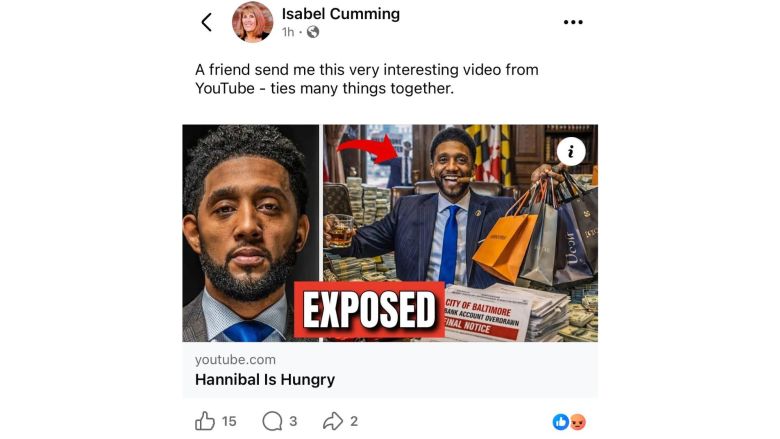
These fundamental differences between the Black community and the left may come to a head. In Baltimore, we see the rise of unelected inspector generals raising “transparency concerns” about the mayor being magnified by local right-wing media. The Baltimore inspector general infamously shared a YouTube video accusing the mayor of using his control of the city budget to connect his donors and friends with government contracts. The video was accompanied by an AI photo of the Black mayor smoking a cigar amid luxury shopping bags and large piles of cash next to a letter that says “City of Baltimore—Bank Account Overdrawn.” This is not the action of an impartial technocrat watchdog but a political operative who has tied themselves in with right-wing local media.
This literally cartoonish example of portraying Black politicians as corrupt might be scoffed at by many leftists, but the left, in more subtle ways, advances concerns that reflect a deep-seated skepticism of Black elected officials. While the attorney general apologized for sharing the video with the AI image, this post shows the ability for the corruption concerns of a sort of horseshoe theory between the progressive left and right to directly undermine Black political power.
In a city that has had two mayors indicted in the past 15 years, this is obviously not to say that corruption does not exist. The failure is in the inability to understand how the Black community is viewing these indictments. Even the most conspiracy-minded Black Baltimoreans don’t believe these mayors were targeted for being “revolutionary.” The joke is they were indicted for committing the mortal sin of “thinking they were the mayor.” There is an understanding that flexing independence, even for essentially neoliberal capitalist concerns, will receive backlash if white power doesn’t sanction these moves. Illegal corruption is a real thing in Maryland, but the tying of illegal corruption to Black bodies obscures the rampant legal corruption white electeds and power brokers—left, right, and center—operationalize every day. The possibility of Black elected officials’ interests in getting votes converging with the community’s interests in self-determined resource redistribution means the community will tend to support these elected officials, even if the specific official doesn’t embody all their freedom dreams. The logical move of offering alternatives from the left politics that affirm Black community needs for self-determination would seem to be a pragmatic choice for the left. Instead, we hear hand-wringing about how the Black community is “voting against their self-interests” by not voting for leftists, showing the left has not understood what the Black community is actually interested in.
The tying of corruption to Black elected officials fits within larger theoretical frameworks of anti-Blackness being an endemic part of American politics. Adam Curtis, in his documentary The Century of Self, argued that former President Bill Clinton cut welfare in part to signal a break from the Democratic base to appeal to the center, a symbolic sacrifice of the old leftist politics to win support from swing voters. A racialized reading of this shows it is a specific disavowal of old-school “Black” politics, akin to his attack on Black author and political commentator Sister Souljah in the famous “Sister Souljah Moment.” One could imagine that left “anti-corruption” efforts will require progressives to produce “socialist SisterSouljah moments” where, to prove they are serious about stamping out “governmental corruption,” they explicitly target Black nonprofits or institutions receiving government money as the face of a new “socialist commitment to good governance.” This capitalization of notions of innate Black corruption would be considered a “necessary sacrifice” to gain the political capital for the expansion of the welfare state akin to Clinton’s attacks on Sister Souljah. This shows the stakes at play in analyzing the left progressive abundance argument, as it can be directly weaponized against the work happening in cities like Baltimore.

The use of Baltimore in this piece is not only because it is the city where I have the most experience, but it is also more demonstrative of the city’s leftist will need to win to be a viable political force. Cities like Philadelphia, Detroit, and Milwaukee, in the key swing states of Pennsylvania, Michigan, and Wisconsin, have politics in many ways more similar to Baltimore than New York. Many of them have Sinclair Media stations pumping propaganda throughout the areas of the state outside the major cities. Racist attacks on local government will not stop and cannot be washed away under a liberal or progressive abundance wave; they must be faced head-on.
Baltimore is also a case study in what a Black Power abundance might look like. While some might be understandably skeptical seeing Baltimore’s Black abundance framed from the top down, as some have at times used somewhat cringe-inducing “Wakanda” rhetoric to frame the Black city’s “Renaissance,” this obscures the reality that Baltimore shows the possibility of a bottom-up example of what it looks like to institutionalize Black abundance. The youth fund is an example of using Black folks’ investments in the human social service sector, where Black folks are overrepresented as employees and owners of service-provision nonprofits. The goal is to shift the human social service away from mainstream white public health methodologies or white savior logics toward centering Black community cultural and spiritual experience at the heart of how services in the city are provided. We Our Us, a local coalition of violence prevention organizations, works on violence prevention by helping with housing, food, and employment. Critically, they also provide a cultural/spiritual foundation and an alternative tribe for connection and socialization. Many of the men and women in the group are formally connected to and inspired by the Nation of Islam, and part of their methodology is for Black men and women to “see the god in themselves so they can see the god in their brothers and sisters.” Black folks don’t just want more services; they want services like We Our Us, the Peace Team, and other groups that harness the best of the cultural and spiritual traditions of Black people to provide services that operationalize community capacity to heal and save itself. An “abundance” of these institutions has not only been effective at decreasing violence; it has also served to legitimize local government from criticism, with folks online responding to Sinclair propaganda, saying things like “I don’t care what Fox 45 say, I see the work, and I see the results.” Not only do they see folks participate in activities like community walks, but also the work culturally resonates with them and affirms their desire for the people from their community to be paid to do the work in that community.
The unprecedented successful decline in murder and nonfatal shootings is an example of institutionalizing African-centered practice into the human-social service ecosystem.
Black power’s long march through the institution was not about diversifying them but about injecting these sorts of liberatory cultural practices into them and shifting resources that make these practices the new best practice. Far from being anti-materialist neoliberal identity politics, it is an indigenous Black political approach to economic redistribution that understands that the goal is to redistribute not just funds but also power. It supplements the traditional version of resource redistribution, taking from the mainstream organizations that have failed the Black community over and over, and investing in Black communal capacity to care for itself. This has come through confrontation with both right-wing Sinclair Media and the liberal technocracy of Bloomberg and Johns Hopkins.
It also has meant confrontation with well-intentioned progressives who did not see the benefits we saw in investing in Black political power. For years, the Black caucus in Maryland was more moderate, and we clashed with them on policing and bail reform policies. However, when a progressive caucus was proposed in the state capital of Annapolis, Leaders of a Beautiful Struggle was one of the organizations opposing it, arguing that it would empower non-white progressives on issues that disproportionately impact poor Black people. Our alternative approach prioritized the Black caucus so they would become more progressive and make them the center of gravity for progressive politics in the state. Investing in pushing the Black caucus to the left paid dividends in policing reform in 2021, facilitated the override of the reparations study bill veto in 2025, and garnered Black caucus support for immigration bills in 2026.
The shift among the Black caucus is a long and complex organizing story, but a relevant part of it is that this challenges the notion from some on the left who say Black elected officials who are not Bernie- or DSA-aligned are inherently conservative corporate shills. It also did not come at the cost of investments in Black self-determination, but as an extension of it. The youth fund serves as proof of concept that is being expanded upon by the Baltimore City Community Reinvestment and Reparations Commission. Appointed not by the mayor but by members of the city council, this commission controls the city’s 30% share of the 35% of all state tax dollars collected from legal cannabis sales in the state. This bill was written by LBS and pushed by members of the Black caucus in Annapolis, viewing the benefit of delivering resources to the Black community as in their electoral interest. City council appointments were chosen not out of an abundance of deference for or belief in the city council but out of an understanding that institutionalization requires structure. By placing the city council as the pressure point within the institution, it is more susceptible to grassroots community political influence because city council districts are smaller and attract fewer campaign donations.
We designed this fund to be able to invest in not only nonprofits but also businesses, cooperatives, and economic institutions. For example, housing leaders like Danies Jones Dorsey, a member of the Baltimore City Reparations Commission, have advanced shared equity options to cooperative housing, arguing that the mainstream of co-ops being for renters risks them being for gentrifiers and ignores the need and desire for Black families to build wealth through housing. Fight Blight B’more has been working to provide legal services to folks facing eviction to keep vibrancy in Black neighborhoods facing vacancy, and they are pushing a land bank model to accelerate Black homeownership using a framework of reparations. These are the sort of economic investments our reparations fund can invest in that traditional philanthropy and traditional leftist, universal redistribution-focused models cannot, given their risk aversion and their inability to invest in anything besides nonprofit institutions. The potential success of the reparations commission sets the stage for further investment from taxation of the $13 billion endowment of Johns Hopkins and other large foundations in Maryland. We already introduced a version of a bill to do this in state government, potentially raising up to $100 million to implement reparations work. The state house sponsor of this reparations bill, State Senator-elect Malcolm Ruff of northwest Baltimore, recently defeated a conservative Democratic state senator incumbent backed by a political machine funded and supported by the former head of American-Israeli Political Affairs Committee (AIPAC).
That some, like Krystal Ball of Breaking Points, mistook Ruff’s victory over a conservative state senator by a progressive Black challenger in Maryland as a manifestation of the larger Zohran Mamdani “progressive wave” and couldn’t see it as an intentional investment by Black civil society in Black political power, is the point of this piece. Baltimore shows that Black Power-based politics is not only effective and politically viable but also politically necessary to mobilize constituencies of working-class Black voters who have not always shown up for mainstream Bernie style progressive candidates. Despite a perceived anti-AIPAC wave, the pro-AIPAC candidate won comfortably in a largely Black district in the DC suburbs. For progressives to win in places with large Black populations, including cities in key swing states, they will need to demonstrate to Black folks that they can deliver by both building houses or apartments and feeding their desire—sometimes expressed on the lower frequencies—for Black self-determination. Ruff’s Northwest Baltimore district had the highest voter turnout of any district in the city, uniting anti-Zionist progressives and grassroots Black power advocates. This is an example of the sort of coalitions necessary to advance the best of both Mamdani-style abundance politics and Black power.
Indeed, given the rise of Latine as a swing demographic, Black voters represent the only reliable base for Democratic votes; increasing turnout is, thus, the key for Democratic victory and any progressive “abundance” politics. Despite claims that white college-educated voters have become the new progressive base, this piece shows the hidden (in plain sight) potential of working-class Black voters to support progressive politics if it supports their need for self-determination. Furthermore, given the white college-educated voters’, there is little juice left to squeeze from the college-educated suburban or gentrified urban strongholds.
“Abundance”-style politics will not increase Black voter turnout without abundant avenues to express their desire for resource redistribution and for communal self-determination. Beyond taxing the endowments of elite foundations and universities, what if we could cut the $1.5 trillion military budget and instead invest that money in Black community-led violence prevention around the nation? What if we taxed data centers not only to invest in traditional Black community development corporations but also to expand the burgeoning ecosystem of Black co-ops represented by institutions like Boston Ujima? What if we took environmental racism seriously and placed a tax on cannabis companies to make a massive community commitment to pay Black men and women, including returning citizens impacted by the War on Drugs, to install solar panels and heat pumps in houses in Black cities, which would double as assistance for legacy homeowners struggling to pay for roof repairs and weatherization? What if we decriminalized cannabis nationally and used a small federal sales tax on cannabis to create a national version of reparations for the War on Drugs, with cities with the most arrests (read as Black cities) getting most of the funds, thereby allowing cities to replicate the Baltimore model for community-controlled reparations? What if, for their support for this cannabis bill, the Congressional Black Caucus conditioned their support for a similar bill that taxed opioid companies for their damage to poor white communities? What if we taxed the endowments of schools like Harvard and Georgetown, built off the benefits of slavery, to fund the implementation of recommendations of the HR 40 study on the impacts of slavery? What if we funded Black farmers to build out solar panels on their farms, who, despite being denied government funds for decades, still own enough land to power the majority of the nation if provided support to combine solar panels with agriculture (so-called “agrovoltaics”)? What if we took the resulting produce to Black schools and Black communities throughout the country? This produce could be distributed through Black food sovereignty organizations like Baltimore’s Black Yield or through Black churches by expanding the work of institutions like the Black Church Food Security Network, which works with Black churches to grow food on their land and connect them with farmers to give fresh produce to their parishioners. What if Black voters in Milwaukee, Philadelphia, and Detroit threatened to withhold their votes for the Democrat or vote Green if these demands were not met?
Is any of this more or less believable than if someone, in 2023, when the murder rate was the highest it had been in history, said that in 3 years we’d cut murder more than half in a city like Baltimore?
The sci-fi components of the abundance critique are useful, but most useful when applied through this sort of Afrofuturist Black power politics. The Ezra Kleins of the world, with their paucity of imagination passing as pragmatism, thankfully do not get to decide the landscape of what is possible. Nor do those who falsely believe the lesson of Mamdani: to throw the baby of Black Power politics out with Eric Adams’ dirty bathwater. The full vision of what the future would look like is for Black folk on the ground to flesh out.
A Black abundance is possible; it is not a utopian dream but a real and tangible political necessity. It, however, will not be given; it will be demanded through threatening political consequences on any political formation, left, right, or center, that refuses to center the belief that Black communities must be at the heart of the institutions that impact Black life and flourishing.